

I facilitated a project which included a number of workshops and design sessions at American Family Insurance. We created a vision for the future Multi-Channel Sales Experience.
This project was grounded in one of five Operational Focus Areas (OFA) for the American Family Insurance strategy. This OFA was intended to support a true multi-channel experience strategy. We were asked to align with other internal organizations including the Agent teams, Sales and Service Organization (SSO), and the IT organization to collaborate in identifying the most important work to accomplish.
We began with a series of workshops that included leaders from across the organization. Agency, Sales and Service, and Digital Experience teams gathered to discuss the ideas they hoped to implement in the future. These capabilities were sorted into a journey framework and prioritized for importance. My team began to visualize capabilities and connect them with the customer and Agent journeys. These journeys supported continual “road shows” intended to show how digital experiences could impact all areas of the business.
Continually presenting these concepts to leadership helped to refine a story. The creation of an animated story was supported by this group which enabled us to share the vision more broadly. Funding was reasonable, albeit limited. We found an internal group that could help produce the animation. The team created storyboards, and the animation moved forward. Our final story took shape.
Allow me to share the story we presented to executives in the organization.
Experience Storytelling
Click on the image above to view our story. We faced limitations in budget, deadlines, and how much of the story we could tell. Budget was our first challenge. We simply could not afford top-level agency talent for the production. Our storyboard took shape and was approved by Marketing leadership. We moved quickly. Within a week, we had sample animation and voiceovers to approve. The remainder of the process went smoothly due to clear story boards. Within our 28 day deadline, the video was ready to share.
Strategic Collaboration
-
Agent, Sales and Service, and Customer Experience teams discussed their future technology needs. Many of the identified service capabilities were ideas we have often heard about in meetings. In this effort, our goal was to create a shared list of needs so that the team could appreciate how these needs aligned into a single strategic vision. The list was long and redundant. We needed to organize the requirements.
-
My small team began to normalize these capabilities into a “story” structure so they could later be used by product managers. We also eliminated redundant stories, culling the list down substantially. Lastly, these stories were organized into a journey framework, “Getting Insurance, Having Insurance, and Using Insurance”. This structure allowed teams to consider stakeholder needs throughout the journey.
-
We recognized that three artifacts would be required to share and discuss our work — Capabilities, Flows, and Visualizations. Capabilities would be the tool that product management most easily understood. Flows were required to describe the technologies used to deliver our experiences. And, visualizations would hopefully be understood by all. We quickly found that teams were confused by wireframes. We were asked, “Are these ready for development?” We adapted by creating a “blue line” style of design.
-
Visualizations of our product strategy brought the journey to life. They helped us tell the story of the customer experience and their insurance journey. We easily described complex features such as customer/agent collaboration. The technology implications and business opportunities became apparent. Our experience, repeatedly telling this story over the course of months, pointed to the need for a video.
-
Our goal of collaboration throughout the ideation process, brought new challenges. Without funding, it was impossible to access scarce resources such as system architects. Our team required “exploratory” funding in order to obtain the input of specialized resources. I participated in product planning meetings for both visibility and contribution. Business funnel prioritization required that all work be aligned with the overarching AmFam business strategy and KPIs.
-
We created a set of storyboards to tell the story and sought funding to have it animated. Our team delivered a powerful vision for the multi-channel sales experience by sharing a strong story about the technology how it can support the customers and Agents. The story of our cross-organization and cross-functional collaboration was equally as powerful.
Three Core Strategies Emerged
Data Management
Understanding our customers is central to any effort to create personalized products and services. Every organization has personas, but connecting data to people allows us to personalize experiences and product suggestions. Data ensures that we understand how a specific customer needs to be served.
Personalization
Personalized recommendations and suggestions can be delivered to customers when we know who they are and what they value. Customers expect a personal relationship with the companies they trust. Personalization makes it easy to accomplish tasks.
Easy & Delightful
Great experiences make complex tasks easy. Insurance is complex. Our goal is to ensure that customers find new value in an old business. This requires seamless organizational collaboration and delivery of services.
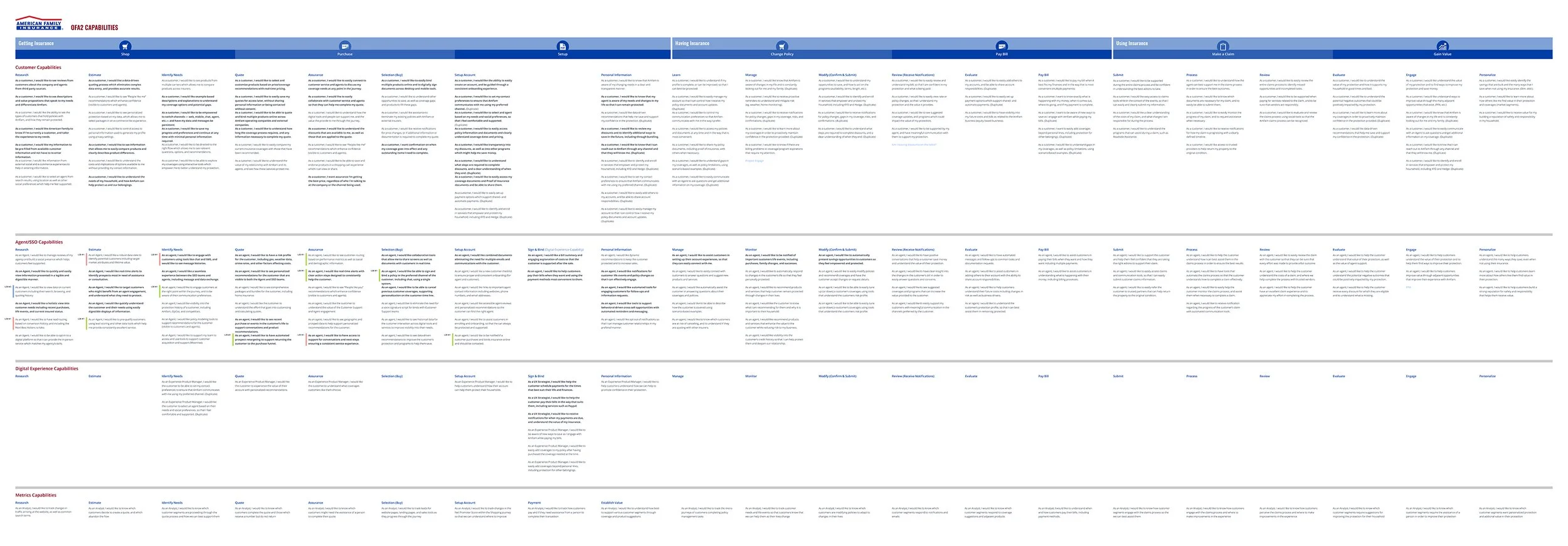
Identified capabilities were normalized into stories for consumption by product management in the future. I laid the capabilities into a journey framework and we prioritized stories by value with each team. This artifact proved to be incredibly valuable. Prioritization helped our team understand how important Agent collaboration was to that team, and how large a technical effort it was to accomplish.
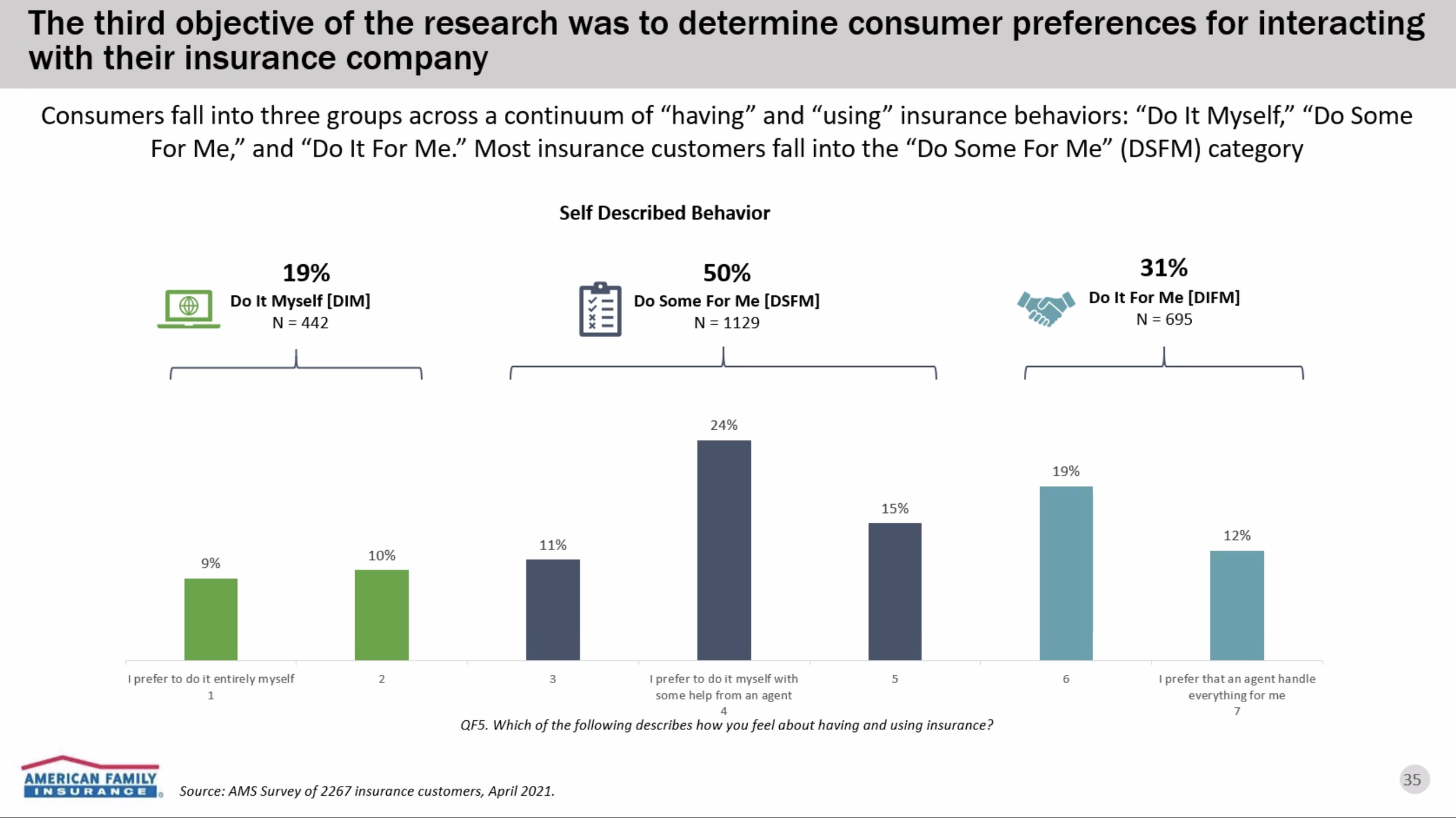
Data and research guides my design decisions. Our stated objective was to create a multi-channel sales experience that empowered customers to “do it themselves,” to “do some of it for me,” or to “do it for me.” The bulk of our customers want some service but at specific points in the journey. Prior to price comparison, many customers prefer to do the work themselves. Then they need confidence to complete the transaction.
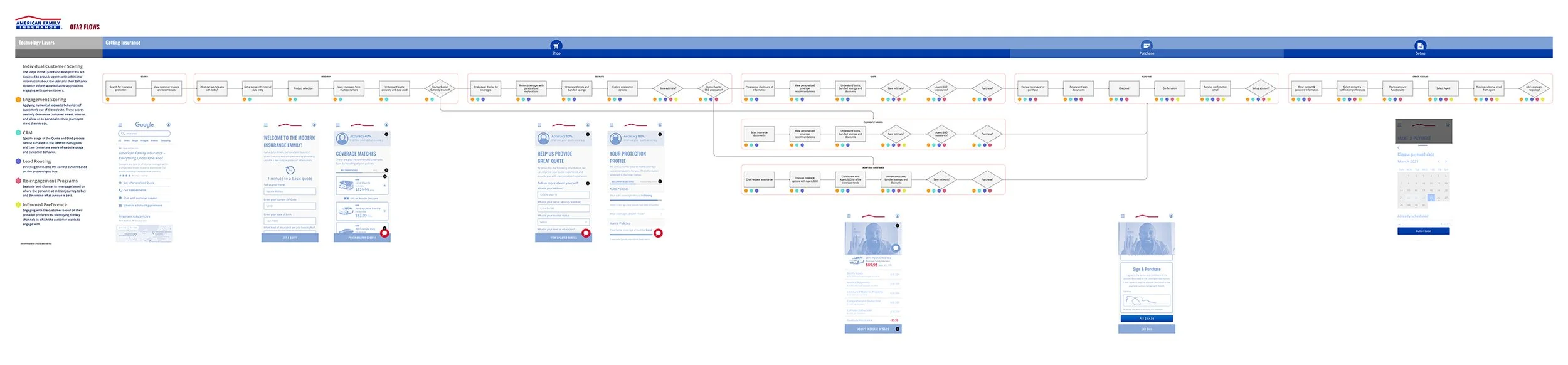
Flows were created so that we could discuss the technology needs across the journey with the IT organization. We needed to represent how a customer who wanted to do everything themselves would experience the insurance journey. In contrast, we also needed to describe the needs of customers who wanted to engage an agent. I began to display visualizations in the flows, since our partners needed to see the experiences in order to gain appreciation for the technologies needed to deliver these products and services to market.
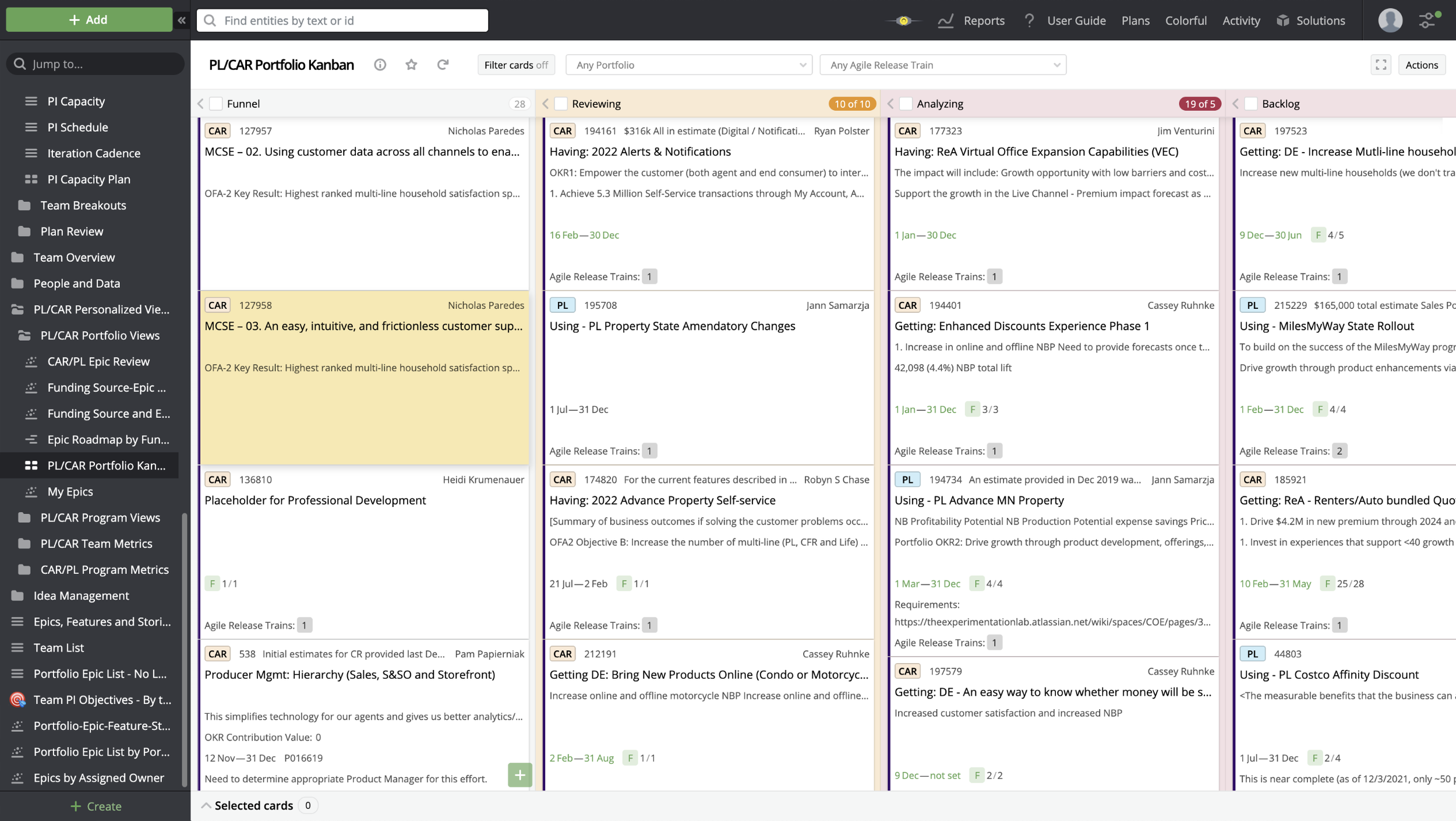
Below: In order to engage system architects, we needed to resource the exploratory work. This required that I begin collaborating in TargetProcess in order to have work prioritized in the business funnel.
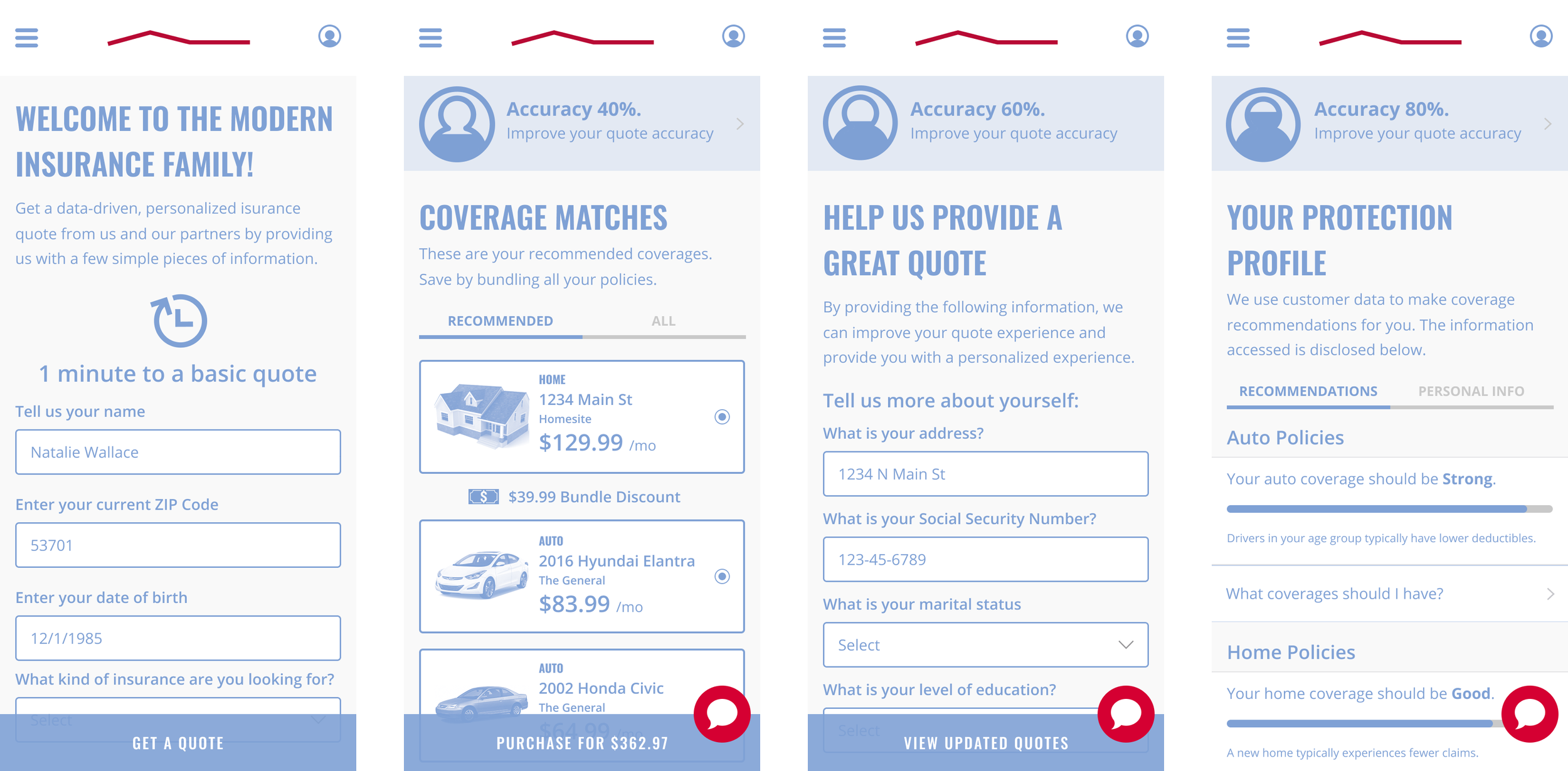
Visualizations were created specifically so that they would not look like a product in the development cycle. I used a “blueprint” model so the team could explore product opportunities quickly. Over the course of months, we rotated new team members into the project, so that others could participate and ideate. We created micro-journey stories to share with external teams to discuss future strategic and technical requirements.
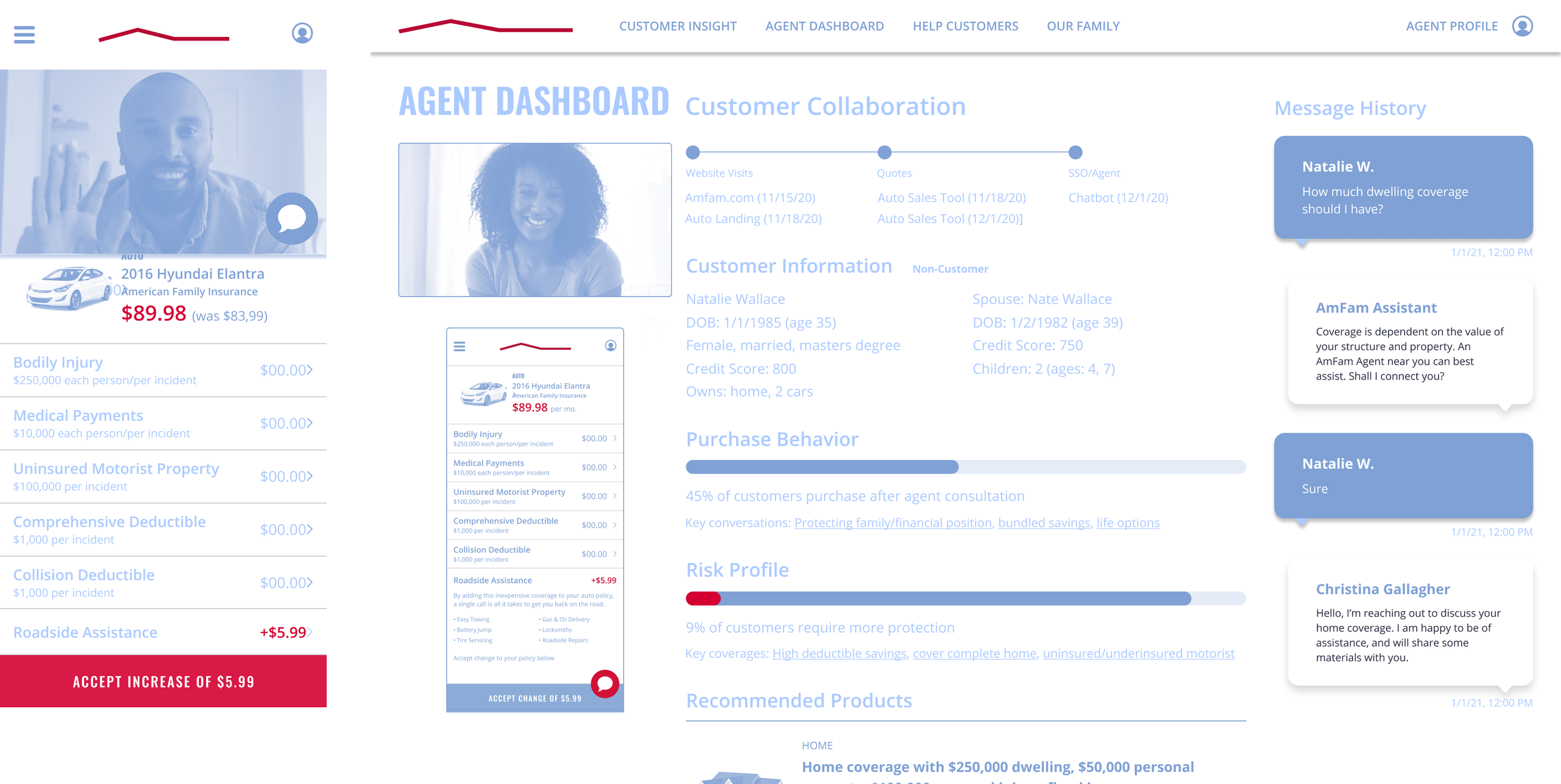
Below: Agent/SSO teams expressed three top priorities: Firstly, they needed customer transaction data and engagement history so that a representative could understand in a moment why the customer was calling. Secondly, being able to accomplish “the next best action” was critical to performance. And lastly, seamless communication and collaboration was essential. Even though we created many visualizations, oftentimes a few of these accomplished the task of communicating complex topics.
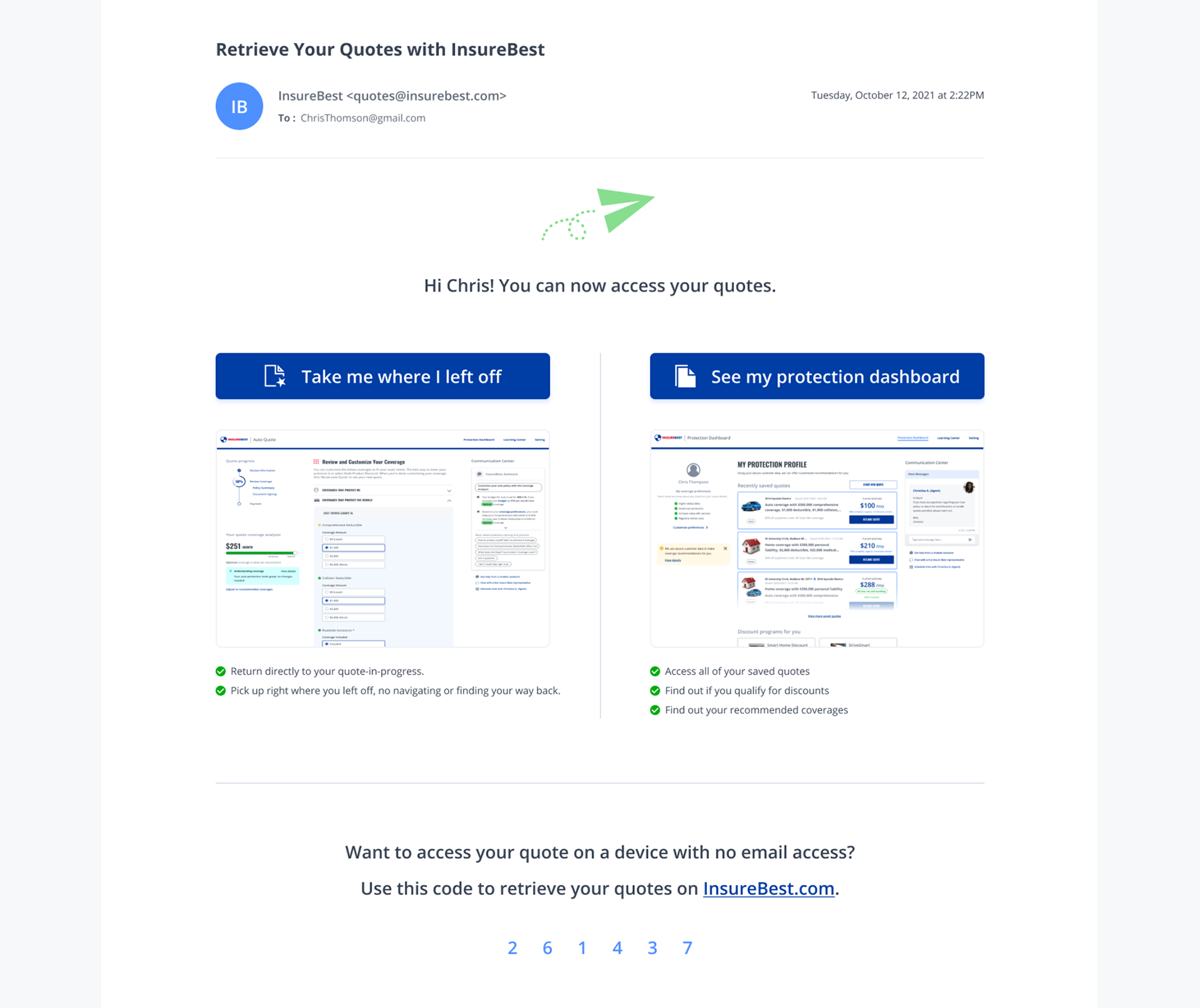
Our research began with a hypothesis that the customer would prefer a “protection profile” rather than simply get a quote. We found that most customers preferred to return to the place they left off in the quoting process without having an understanding of this profile. Once customers experienced the “value” of the “protection profile” they overwhelmingly wanted to see recommendations and other tools which provided new value to them.
“That’s one of those things my husband set up and we didn’t have rental car reimbursement so when we went through that whole car totaling thing it was a big mess because it was $3 dollars a month!! Why was that not added??? This breakdown here [referring to the coverage analyzer] tells you that you might want to add that to your policy.”
Customer Interview
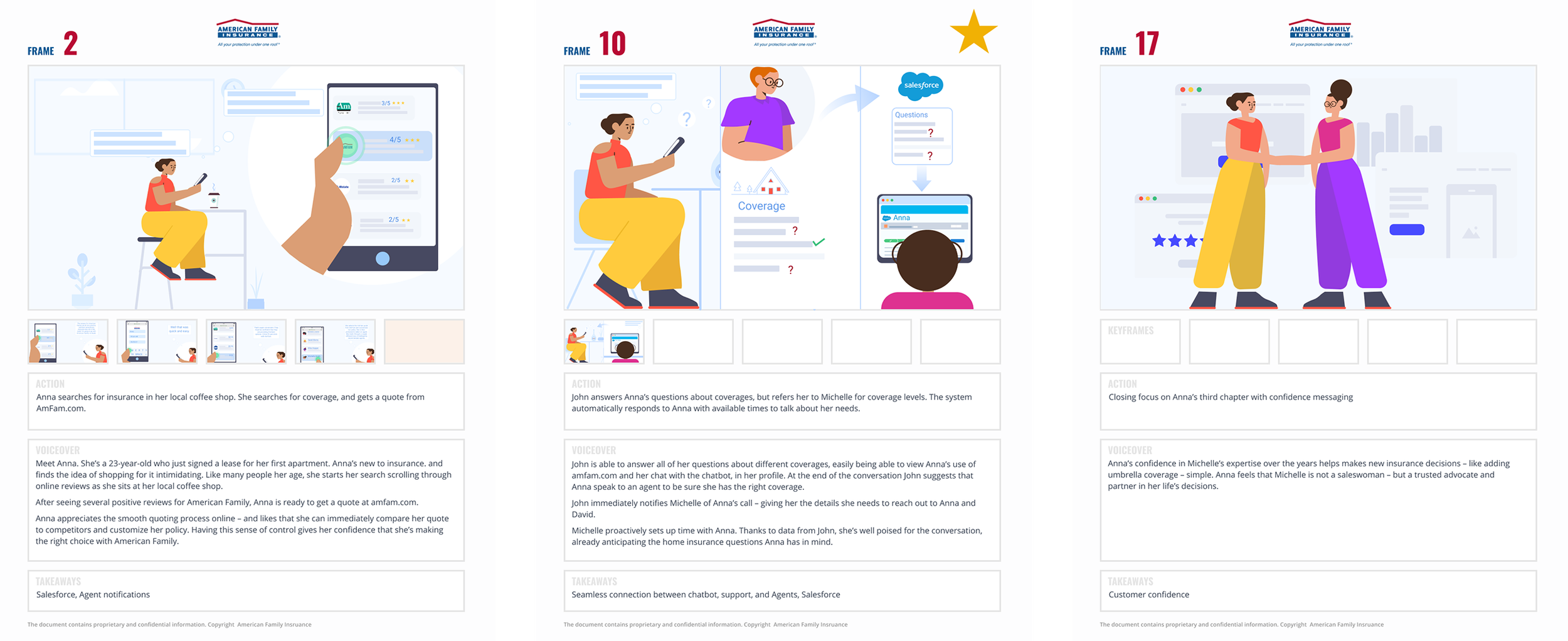
Many presentations, sharing sessions, and workshops occurred during this project. An easier way to share our vision with others was sorely needed. My team had previously considered a video for a 2025 Vision project. We received the funding to proceed with an animation for this story, and we began to create the storyboards to support production.
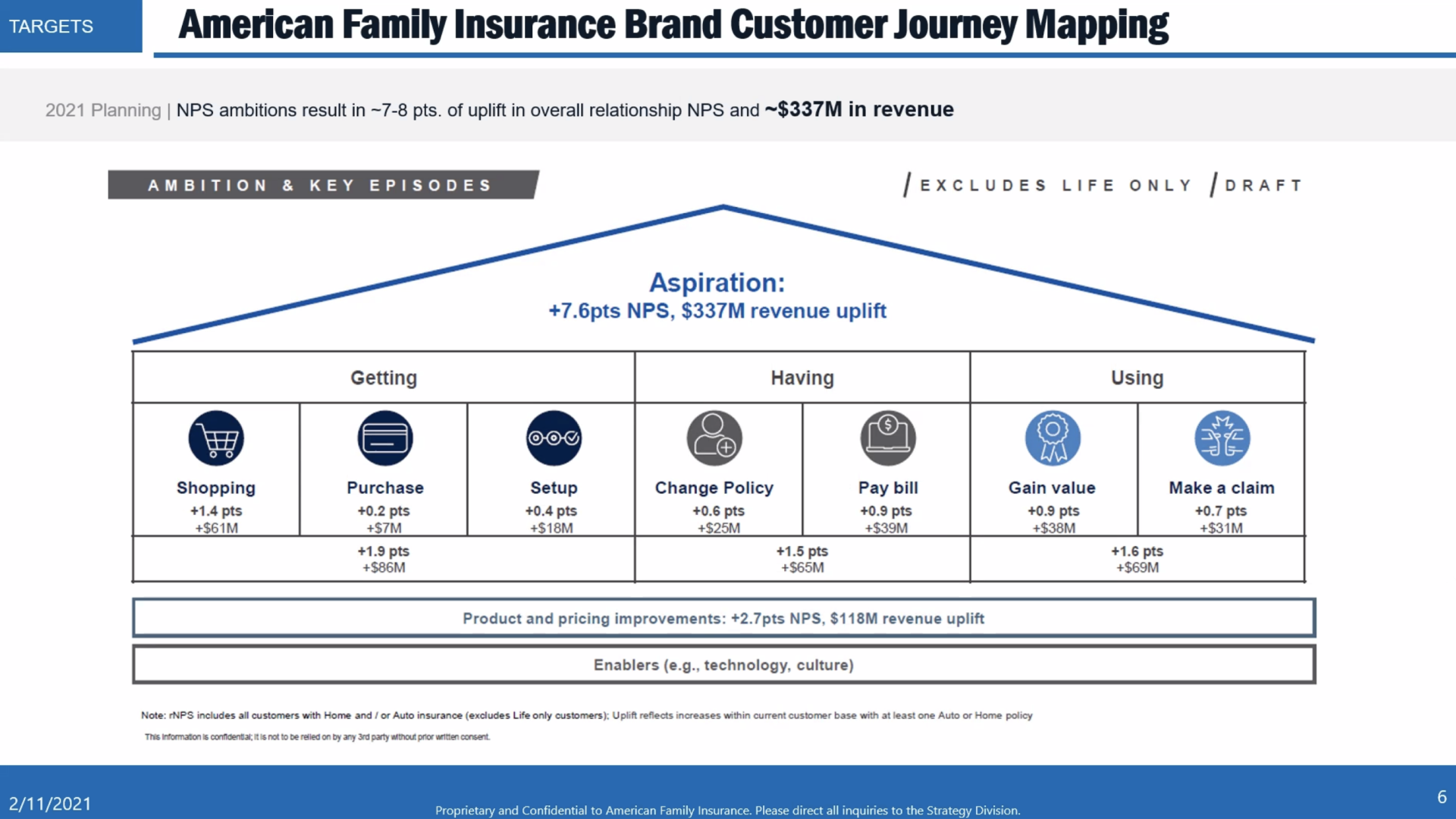
Strategic objectives and revenue goals were our guiding light throughout the creation of these experiences.
Revenue goals guided our discussions with partners and leadership